




Blog
Commercial EV Chargers in Ireland: Guide for Workplaces and Businesses

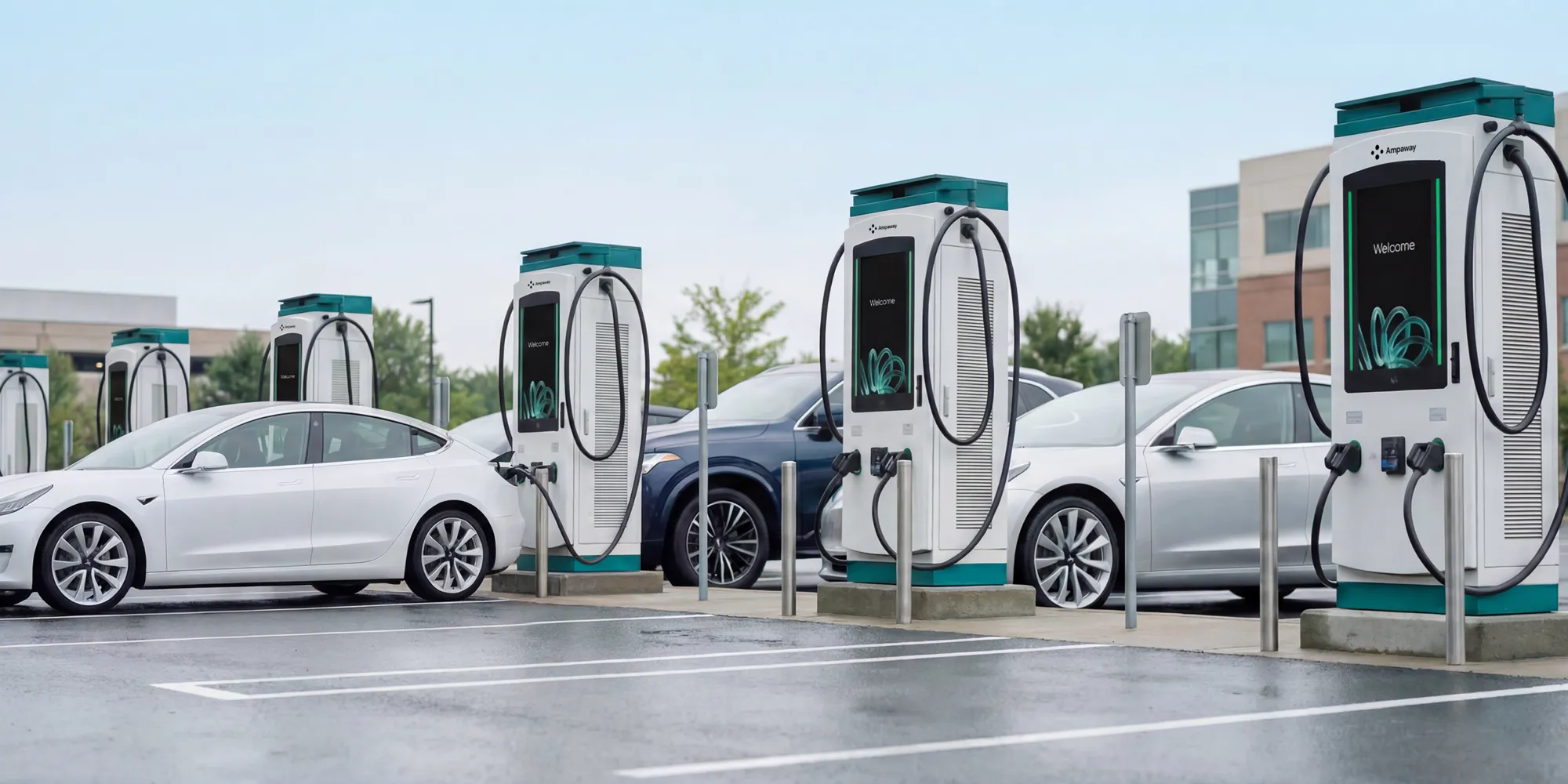
Commercial EV Charging Guide
Commercial EV chargers are becoming part of normal business infrastructure in Ireland. For workplaces, fleets, visitor car parks and retail sites, the key question is not only whether EV charging is useful, but how to plan the right charging layout, electrical capacity, access model and long-term maintenance plan.
A well-designed EV charging project can support employees, customers and fleet vehicles while helping a business prepare for future energy demand. The strongest projects look at charger use, parking layout, electrical capacity, solar PV, battery storage and future expansion together.
Why Commercial EV Chargers Matter for Irish Businesses
Businesses are under pressure to support cleaner transport, improve employee facilities and prepare for more electric vehicles on site. Commercial EV chargers can help companies create a more practical, future-ready and sustainable business location.
For some sites, EV charging is mainly an employee benefit. For others, it supports customers, tenants, visitors or commercial fleets. The right charging strategy depends on how vehicles use the site and how long they remain parked.
Commercial EV chargers help businesses provide reliable charging for staff, visitors, customers or fleet vehicles. A good project should be planned around real parking behaviour, site capacity and future electricity demand.
Common Business Use Cases
Commercial EV chargers can be used across many Irish business locations, including offices, hotels, retail parks, warehouses, factories, logistics centres, schools, business parks and shared commercial car parks.
- Employee charging for staff who park during working hours.
- Visitor and customer charging for retail, hospitality and destination sites.
- Fleet charging for vans, company cars and operational vehicles.
- Tenant charging for business parks or shared commercial buildings.
- Car park charging combined with solar car shades.
- Commercial sites planning solar PV and battery storage integration.
What to Check Before Installing EV Chargers
Before installing EV chargers, businesses should review how chargers will be used, where they should be located, whether the site has enough electrical capacity and how charging will be managed after installation.
Important checks include:
- Current electrical capacity and future site demand.
- Number of staff, visitors, tenants or fleet vehicles likely to use the chargers.
- Charger locations, cable routes, parking layout and accessibility.
- Load management, payment software and user control requirements.
- Maintenance, monitoring and support after installation.
- Potential connection with solar PV, battery storage or solar car shades.
Workplace, Fleet and Customer Charging
Workplace charging is often designed around employees who park for several hours. This can allow businesses to install chargers that fit normal working patterns and staff parking behaviour.
Fleet charging may need a more structured plan based on vehicle schedules, daily mileage, overnight parking and operational reliability. Customer charging should be simple, visible and reliable so that visitors can use the service with confidence.
| Charging Type | Main Users | Planning Focus |
|---|---|---|
| Workplace Charging | Employees and long-stay staff parking. | Access control, fair use, charging duration and future staff demand. |
| Fleet Charging | Company cars, vans and operational vehicles. | Vehicle schedules, charger speed, reliability and daily route needs. |
| Customer Charging | Visitors, customers and public-facing users. | Visibility, payment setup, ease of use and charger uptime. |
| Solar EV Charging | Businesses with solar PV or large car parks. | Solar generation, load management, battery storage and parking layout. |
Combining EV Chargers With Solar PV
For sites that already have solar PV, EV chargers can help use more electricity on site during daylight hours. This can be especially useful for offices, schools, business parks, retail sites and commercial car parks where vehicles remain parked during the day.
Where roof space is limited, solar car shades can create additional solar generation directly above parking areas. This makes the car park part of the energy system while improving the parking experience for staff and visitors.
Battery Storage and Load Management
Battery storage may help smooth demand and reduce pressure during busy charging periods. It can also store surplus solar electricity and release it later when chargers or building loads need more power.
Load management is important when several chargers are used at the same time. Without planning, EV charging can increase peak demand and put pressure on site infrastructure. A proper assessment helps decide whether battery storage, phased installation or smart charging control is needed.
How IRPC Can Help
IRPC can review your parking layout, energy use, electrical capacity and future EV plans before recommending a commercial EV charging structure. This helps avoid under-sized systems, poor charger placement or expensive redesign later.
- Commercial EV Chargers for workplaces, fleets and business car parks.
- Solar Car Shades for EV charging-ready parking areas.
- Battery Storage for peak demand control and energy flexibility.
- Contact IRPC for a site-specific EV charging assessment.
Common Mistakes to Avoid
Commercial EV charging projects can become more expensive or less effective when they are planned too quickly. Charger hardware is only one part of the project. The wider site energy plan matters just as much.
- Installing chargers without checking site electrical capacity.
- Choosing locations that are inconvenient for users.
- Ignoring future fleet, staff or customer charging growth.
- Not deciding whether charging should be free, paid or restricted.
- Overlooking solar PV, battery storage or solar car shade integration.
- Failing to plan maintenance, monitoring and support.
Next Step
If your business is planning EV charging for employees, customers or fleet vehicles, start with a site-specific assessment. IRPC can help you compare charger options, solar integration, battery storage and long-term maintenance needs.
Request an EV Charging Assessment
IRPC can review your business site, parking layout, user demand, electrical capacity and future EV charging plans before recommending a practical solution.
Request an EV Charging AssessmentCommercial EV Chargers FAQs
What are commercial EV chargers?
Commercial EV chargers are charging points installed at business sites for employees, visitors, customers, tenants or fleet vehicles. They are usually planned around parking layout, user access and electrical capacity.
How many EV chargers does a business need?
The number depends on staff numbers, visitor demand, fleet plans, parking duration, available electrical capacity and future growth. A site assessment can help define the right starting point.
Can businesses charge users for EV charging?
In many cases, yes. Suitable charger software can support paid charging, user access, reporting and billing for staff, visitors, tenants or customers.
Can EV chargers work with solar PV?
Yes. EV chargers can be planned with solar PV so that some charging demand is supported by electricity generated on site during daylight hours.
Can battery storage support EV charging?
Battery storage can help manage peak demand, store surplus solar electricity and improve energy control when multiple chargers are used.
Should fleet EV charging be planned differently?
Yes. Fleet charging should consider vehicle schedules, daily mileage, charging windows, charger speed, reliability and operational needs.