




Blog
Workplace EV Charging Ireland | Business Guide

Workplace EV Charging Guide
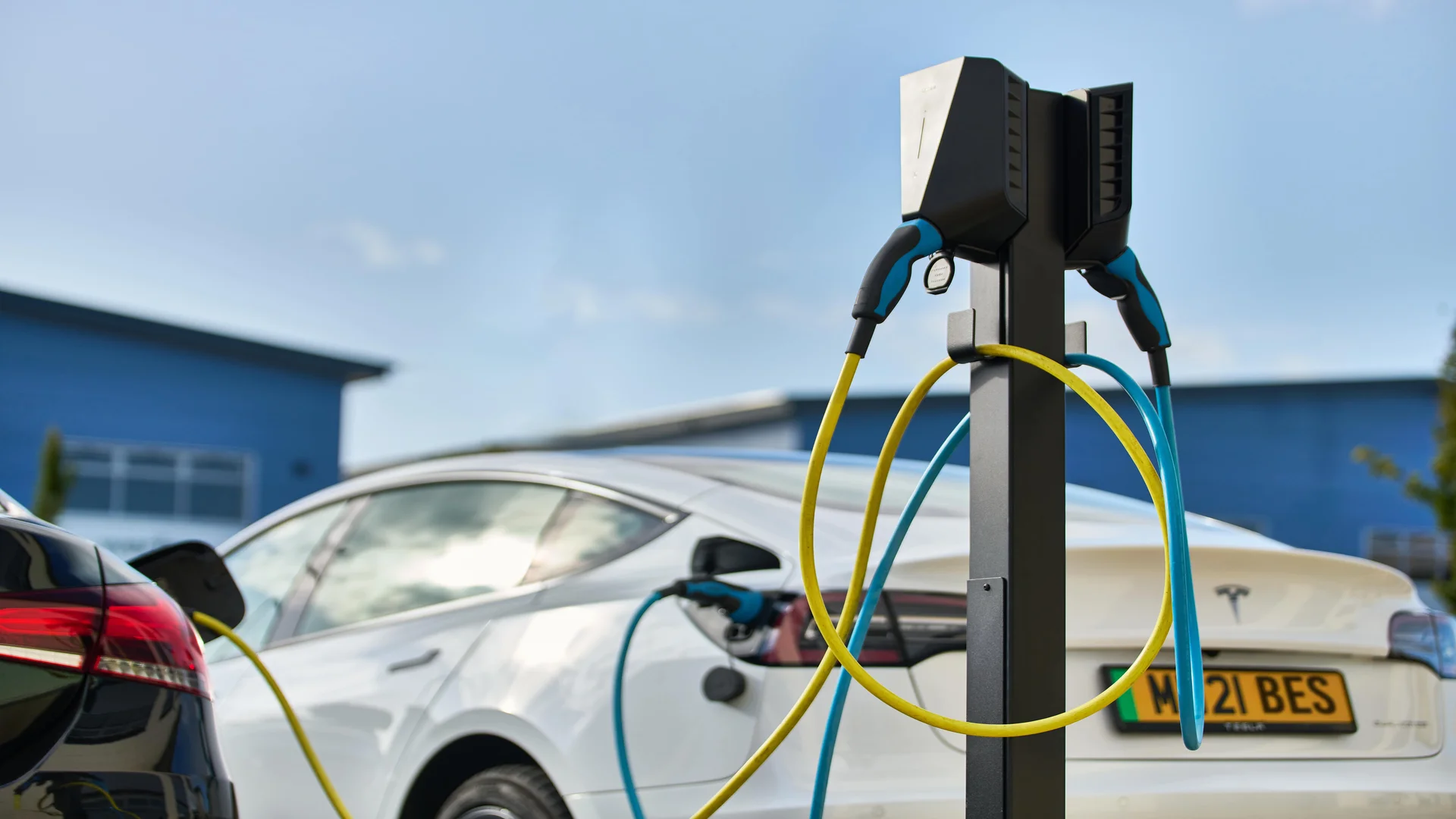
Workplace EV charging is becoming more important for Irish businesses as employees, visitors and company fleets move towards electric vehicles. A practical workplace charging plan can improve staff experience, support fleet transition and prepare the business for future energy demand.
For many companies, EV charging is no longer just a parking upgrade. It is part of a wider site energy strategy that may include commercial EV chargers, solar PV, battery storage, solar car shades and better long-term electricity planning.
Why Irish Businesses Should Prepare for Workplace EV Charging
EV adoption creates new expectations for commercial buildings and workplaces. Employees may want to charge during the working day, customers may prefer sites with charging facilities, and fleet managers may need reliable charging access for vans or company cars.
Preparing early gives businesses more control over charger locations, electrical capacity, access rules, software, payment models and future expansion. It also reduces the risk of installing chargers in the wrong place or needing costly redesign work later.
Workplace EV charging helps businesses provide charging for staff, visitors, customers or fleet vehicles. The best projects are planned around real parking use, electrical capacity and future energy demand.
Benefits of Workplace EV Charging
Workplace EV chargers can improve the value of a business site and make it easier for employees, customers and fleet vehicles to access reliable charging.
- Supports employees who already drive electric vehicles.
- Helps businesses prepare for future fleet electrification.
- Improves customer, visitor and tenant experience.
- Creates a visible sustainability improvement for the site.
- Can be combined with solar PV and battery storage for better energy planning.
- May support staff retention where charging is offered as a workplace benefit.
- Can help commercial sites become more future-ready.
Plan Charger Numbers Around Real Use
The number of EV chargers should be based on parking spaces, staff numbers, fleet schedules, visitor dwell time and expected future growth. Installing too few chargers can create frustration, while installing too many without load management can increase cost and strain the site’s electrical capacity.
A workplace EV charging assessment should look at who will use the chargers, when they will charge, how long vehicles stay on site and whether demand is likely to increase over time.
| Charging Use Case | Typical Users | Planning Consideration |
|---|---|---|
| Employee Charging | Staff and long-stay workplace users. | Charging can be slower if vehicles remain parked for several hours. |
| Visitor or Customer Charging | Customers, guests, tenants or public-facing users. | Access control, payment setup and user experience become more important. |
| Fleet Charging | Company cars, vans or operational vehicles. | Charging speed, reliability and vehicle schedules need detailed planning. |
| Solar EV Charging | Sites with solar PV, solar car shades or future renewable plans. | Charging demand should be reviewed alongside solar generation and battery storage. |
Control Access and Payments
Workplace EV charging can be set up for free staff use, paid charging, visitor access, tenant billing or fleet-only use. The software and access-control model should be chosen early because it affects user experience, reporting and administration.
Some businesses may want open access for customers, while others may prefer private charging for employees or fleet vehicles. A good charging plan should define access rules before installation.
Important access questions include:
- Will chargers be used by staff, visitors, customers, tenants or fleet vehicles?
- Will charging be free, paid or restricted to approved users?
- Does the business need usage reporting?
- Who will manage charger access and billing?
- Will more chargers be added in future?
Consider Solar PV and Battery Storage
Solar PV can support EV charging during daylight hours, especially for offices, schools, retail sites, business parks and commercial car parks. Battery storage can help manage peak demand and support a more flexible energy strategy.
Businesses with larger car parks may also consider solar car shades to generate electricity from parking areas. This can turn existing parking space into a clean energy asset while supporting EV charging infrastructure.
- Commercial EV Chargers for workplaces, fleets and business car parks.
- Solar Car Shades for car park solar generation and EV charging integration.
- Battery Storage for better energy control and peak demand management.
Workplace EV Charging and Fleet Transition
Fleet charging needs more planning than simple visitor charging. A business with electric vans or company cars needs to consider vehicle schedules, daily mileage, charging windows, charger speed, site capacity and operational reliability.
If a fleet depends on charging to complete daily work, the charging setup must be practical, reliable and easy to manage. This is why fleet charging should be assessed around real business operations rather than general assumptions.
Maintenance and Monitoring
EV chargers should be monitored and maintained so users can rely on them. A maintenance plan should cover uptime checks, software access, hardware support, fault response and clear responsibility for ongoing operation.
Monitoring is also useful for businesses that want to understand charger usage, energy demand, user behaviour and future expansion needs.
Common Mistakes to Avoid
Workplace EV charging projects can become inefficient if they are planned too quickly or treated as a simple hardware installation. The charger location, software setup and electrical capacity all need proper review.
- Installing chargers without reviewing current and future demand.
- Ignoring electrical capacity and load management.
- Choosing charger locations that are difficult for users to access.
- Not deciding whether charging will be free, paid or restricted.
- Forgetting future fleet charging or visitor charging needs.
- Not considering solar PV, battery storage or solar car shade integration.
- Failing to set up monitoring and maintenance from the start.
Next Step for Irish Workplaces
Before choosing charger hardware, ask for a workplace EV charging assessment. IRPC can review your site, parking layout, user demand, electrical capacity, solar PV potential and future plans, then recommend a practical rollout plan.
Plan Workplace EV Charging
IRPC can help your business plan commercial EV chargers for staff, visitors, customers or fleet vehicles, with options to connect EV charging with solar PV, battery storage and solar car shades.
Plan Workplace EV ChargingWorkplace EV Charging FAQs
How many workplace EV chargers does a business need?
The number depends on staff numbers, parking spaces, visitor demand, fleet plans, dwell time, available electrical capacity and expected future growth. A site assessment can help define a practical starting point.
Can workplace EV chargers be used by employees and visitors?
Yes. EV chargers can be configured for staff, visitors, tenants, customers or fleet vehicles. Access rules and payment options depend on the charger hardware and software selected.
Can a business charge users for workplace EV charging?
In many cases, yes. Suitable charger software can support paid charging, user accounts, access control and usage reporting.
Can workplace EV charging work with solar PV?
Yes. Solar PV can support daytime EV charging where generation and charging demand overlap. The system should be designed around real site usage and available solar capacity.
Can battery storage help with workplace EV charging?
Battery storage can help manage peak demand, store surplus solar generation and support better control of charging loads. Suitability depends on the site’s demand profile and tariff structure.
Should EV charging be planned before fleet electrification?
Yes. Businesses planning electric vans or company cars should assess charging needs early, including vehicle schedules, charging windows, charger speed and electrical capacity.